|
7. The Owners Any discussion of the ownership of collieries in the Bristol region is problematic for several reasons. Firstly, many were owned by individuals or partnerships who used trading names or by private limited companies, and in neither case is it easy to ascertain the names of the individuals concerned. Secondly, a number of names such as Brain, Fussell, Hippisley, Holwey, Mogg and Samborne occur frequently in lists of owners, but once again it is often impossible to determine which member of any particular family was involved in the running of any specific enterprise. Nevertheless, some of the more significant local colliery proprietors can be placed into the categories of owner which have been suggested by Mitchell:- (B R Mitchell (1984: Cambridge University Press: Cambridge) Economic development of the British coal industry 1800-1914, pp. 54-60) i) Landowners, a class whose active involvement in the industry was, he suggests, in decline by the beginning of the nineteenth century, a fact which Church attributes to the increased financial outlay and risk involved in colliery ownership, although he also notes that the south-west was one of the regions least dependent on landed capital. (Roy Church (1986: Oxford University Press: Oxford) The History of the British Coal Industry Volume 3, 1830-1913: Victorian Pre-eminence, pp. 122 & 124) ii) “Professional coalowners” whose main source of income had been the working of collieries for at least a generation and who formed the majority of owners after 1850. iii) Those who had begun their careers as mining engineers and colliery managers. iv) Local capitalists “who were attracted into colliery enterprise,” although Church feels that most of the resulting investment was on a relatively small scale. (Roy Church (1986: Oxford University Press: Oxford) The History of the British Coal Industry Volume 3, 1830-1913: Victorian Pre-eminence, pp. 124 & 125) v) Companies whose major business interests were in other areas such as iron and steel and the manufacture of bricks and firebricks. Church agrees about the importance of the iron industry and also suggests that many who had profited from the development of the railway industry chose to invest in the coal industry, although no obvious local example can be identified. (Roy Church (1986: Oxford University Press: Oxford) The History of the British Coal Industry Volume 3, 1830-1913: Victorian Pre-eminence, pp. 121-129) vi) Joint stock companies which attracted diverse investors, often having no previous involvement in the coal industry, or geographical connection with mining areas. According to Church, limited companies accounted for at least 40% of national employment in 1910 and between 3% and 7% of the total number of owners in 1913. (Roy Church (1986: Oxford University Press: Oxford) The History of the British Coal Industry Volume 3, 1830-1913: Victorian Pre-eminence, p. 134) Local figures for these years were not available during the preparation of this essay, but in 1907 limited companies accounted for 52% of owners and 63% of employment and in 1917 43% of owners and 58% of employment.(Year 1907. List of Mines in the United Kingdom of Great Britain and Ireland, and the Isle of Man (1908: HMSO: London), pp. 405-409 & 420-421; Year 1917. List of Mines in the United Kingdom of Great Britain and Ireland, and the Isle of Man (1918: HMSO: London), pp. 251-254 & 261-263) Many of the colliery owners in the Bristol region can be fitted into these categories and brief histories of some of them are given below, whilst that of the Beauchamp family, who eventually came to control most of the output of the coalfield is dealt with in more detail in Chapter 8. 7.1: Landowners Mitchell asserts that, by 1800, the majority of landowners preferred to allow others to take the financial risk involved in extracting coal from beneath their land and were content to limit their financial interests to the collection of royalty payments.(B R Mitchell (1984: Cambridge University Press: Cambridge) Economic development of the British coal industry 1800-1914, p. 55) This is at least partly true in the case of the Duke of Beaufort (with collieries at Kingswood and Stapleton) and the Earl Ducie (Cromhall colliery), whose pits had closed by the 1850s, thus ending their direct connection with the coal industry, although it is not known whether their coal was later worked by others. (Report of the Commissioners Appointed to Inquire into the Several Matters Relating to Coal in the United Kingdom, Volume I, C 435 (1871: HMSO: London), p. 63; Robert Hunt (1856: Longman, Brown, Green & Longmans: London) Mineral Statistics of the United Kingdom of Great Britain and Ireland for the Year 1855, p. 147; Robert Hunt (1857: Longman, Brown, Green & Longmans: London) Mineral Statistics of the United Kingdom of Great Britain and Ireland for the Year 1856, p. 188) Other landowners, however, continued to play an active part in the industry into the twentieth century. The Earl of Warwick’s collieries at Clutton (Frys Bottom, Greyfield and Clutton), for example, were initially run in partnership with various local entrepreneurs, but in the latter days of the business, leading up to the closure of Clutton in 1921, the Earl seems to have been its sole proprietor.(C G Down & A J Warrington (nd: David & Charles: Newton Abbot) The History of the Somerset Coalfield, pp. 71-82; Bristol University Library, Somerset Miners’ Association papers, DM443, passim) 7.1.1: The Smyth Family The Smyth family of Ashton Court became involved in mining at Bedminster in around 1748, when Jarrit Smyth formed a partnership with a mining engineer named Bennett. (Roy Webber (1985) “Ashton Gate: Industrial development of a suburb,” Bristol Industrial Archaeology Society Journal, 18, pp. 5-9, 5) In 1841 it was noted that “The Bedminster collieries are conducted by “Sir John Smith & Co,”” whilst in 1854 Hunt recorded the owners as the Old Bedminster Coal Company.(Children’s Employment Commission, Appendix to First Report of the Commissioners, Mines, Part II, Report and Evidence from Sub-Commissioners (PP 1842, XVII), p.50; Robert Hunt (1855: Longman, Brown, Green and Longmans: London) Mineral Statistics of the United Kingdom of Great Britain and Ireland for 1853 and 1854, p. 120) It is not certain when the Smyths withdrew from the business, but by 1876 the owner is listed as H Bennet; the Smyths continued to receive royalties, however, and when Dean Lane colliery closed, the land reverted to their control and the site was converted into a park. (Robert Hunt (1876: Longmans, Green & Co: London), Mineral Statistics of the United Kingdom of Great Britain and Ireland for the Year 1876, p. 209; Western Daily Press, 24 November 1914, obituary of Lady Emily Frances Smyth, reproduced in Bristol Obituary and Will Database (1997: University of the West of England: Bristol)) The family also owned royalties at Foxcote, Pucklechurch and Nailsea and may have been actively involved in mining at the latter.(Bristol Record Office, catalogue of Smyth family papers; Bristol Record Office, 9492/49, prospectus for the sale of Kingswood and Parkfield collieries, 1900; Margaret Thomas (1996: H G & M A Thomas: Little Horkesley) The Nailsea Coalmines, pp. 17-19) Their major direct interest in the industry was at Coalpit Heath, where, according to John Cornwell, Sir John Smyth commenced mining after inheriting land at Westerleigh in 1708. Once again, the pits were initially worked in partnership with others, although by 1870 Sir Greville Smith appears to have been the sole owner of the business.(John Cornwell (1983: D Brown and Sons: Cowbridge), Collieries of Kingswood and South Gloucestershire, p. 5) A limited company, the Coalpit Heath Company Ltd, was eventually formed and, although the extent of the family’s shareholding is not known, it is clear that they managed to maintain an active interest in the business until nationalisation.(The Colliery Year Book and Coal Trades Directory 1939 (nd: The Louis Cassier Company: London), p. 99) 7.1.2: The Waldegrave Family The Waldegrave family, who owned a number of collieries at Radstock, are the most notable exception to Mitchell’s claim regarding the withdrawal of landowners from the industry. Mining at Radstock began relatively late, the first leases for exploration being granted in 1749 and coal being found in 1763. (C G Down & A J Warrington (nd: David & Charles: Newton Abbot) The History of the Somerset Coalfield, p. 161) Initially, the collieries were operated under leases granted by the Waldegraves, but in about 1847 or 1848 the Countess Waldegrave, widow of the seventh Earl, managed to evict the tenants and assume full control of the pits, a fact which Church regards as exceptional. (C G Down & A J Warrington (nd: David & Charles: Newton Abbot) The History of the Somerset Coalfield, p. 162; The Judgement pronounced by Mr Justice Fry in the action Braham v Beachim on the subject of “The Radstock Colliery Proprietors,” 12th February 1878 (nd: Evison & Bridge: London), p. 5; Roy Church (1986: Oxford University Press: Oxford) The History of the British Coal Industry Volume 3, 1830-1913: Victorian Pre-eminence, p. 124) The Waldegrave family history is somewhat complicated, the seventh Earl having married Frances, the widow of his illegitimate elder brother, John James Waldegrave of Navestock in Essex, who had been born before his parents’ marriage and so was unable to inherit the title. Following the Earl’s death in 1846, Frances married George Granville Harcourt (Tory MP for Oxfordshire) who died in 1862, after which she married Chichester Fortescue (Later Baron Carlingford), a Liberal MP and minister in various administrations from 1854 to 1885. On the death of her second husband the Countess inherited all the Waldegrave estates in Somerset and they only reverted to the possession of the tenth Earl following Carlingford’s death in 1898.(Osbert Wyndham Hewett (1956: John Murray: London) Strawberry Fair: A Biography of Frances, Countess Waldegrave, 1821-1879, p. 17; Dictionary of National Biography (1921-22: Oxford University Press: Oxford), Volume XX, pp. 471-472 & Volume XXII, pp. 652-654; Earl Waldegrave (1969/70) “James McMurtrie of Radstock 1839-1914, a Victorian Personality,” Proceedings of the Somersetshire Archaeological and Natural History Society, 114, pp. 27-36, 29) Neither the Countess nor any of her husbands appear to have played a very active role in the management of the collieries and Church attaches particular significance to the work of the colliery manager, George Clementson Greenwell, and his successor, James McMurtrie. (Roy Church (1986: Oxford University Press: Oxford) The History of the British Coal Industry Volume 3, 1830-1913: Victorian Pre-eminence, p. 459) When Greenwell became manager at Radstock in January 1854, there were six pits at work (Ludlows, Middle Pit, Old Pit, Smallcombe, Tyning and Wellsway; Church states that there were twelve, but six of these were, in fact, shafts of less than three feet six inches diameter which were only used for pumping). The pits were apparently not connected as, following the partial collapse of the shaft at Tyning, the workers had to be redeployed to the other pits. Greenwell undertook a programme of modernisation which involved enlarging the shafts at Tyning and Ludlows and the closure of Smallcombe and Old Pit, the success of which may be judged by the fact that he raised the annual output from 76,408 tons in 1854 to 128,813 tons in 1860.(George Clementson Greenwell (1899: The Quarry Publishing Co: London) The Autobiography of George Clementson Greenwell, pp. 131-137; Roy Church (1986: Oxford University Press: Oxford) The History of the British Coal Industry Volume 3, 1830-1913: Victorian Pre-eminence, p. 415; Somerset Record Office, Strachie MSS, DD/SH/74/25) Greenwell had also been responsible for the discovery of iron ore at Westbury in Wiltshire and became a director of the Westbury Iron Company Ltd which was set up to exploit the discovery; having overseen the sinking of the company’s Newbury colliery, he arranged for James McMurtrie to be appointed manager, and in 1863, when Greenwell became manager of Poynton Collieries in Cheshire, McMurtrie succeeded him at Radstock. (George Clementson Greenwell (1899: The Quarry Publishing Co: London) The Autobiography of George Clementson Greenwell, pp. 138-139 & 160-161) According to the twelfth Earl, McMurtrie’s “chief job was to forward £2,000 quarterly” to the Countess “or explain why not.”(Earl Waldegrave (1969/70) “James McMurtrie of Radstock 1839-1914, a Victorian Personality,” Proceedings of the Somersetshire Archaeological and Natural History Society, 114, pp. 27-36, 28) Since the Countess was, for the most part, living in London and, it may be presumed, knew little about the operation of the collieries anyway, McMurtrie’s responsibilities were considerable; he eventually became manager of all the Waldegrave estates in Somerset and was also to act as Carlingford’s executor.(Earl Waldegrave (1969/70) “James McMurtrie of Radstock 1839-1914, a Victorian Personality,” Proceedings of the Somersetshire Archaeological and Natural History Society, 114, pp. 27-36, 32 & 35) Other Waldegrave business interests included The Waldegrave Lead Smelting Company Ltd and the Waldegrave Lead Mines Company (although Hunt claimed that the latter actually mined iron); both firms were active on the Mendips, and, in view of the accuracy of some of Hunt’s work, there remains the possibility that they were one and the same. It should also be borne in mind that, as McMurtrie’s name is not mentioned in connection with either of these companies, they may, in fact, have been owned by another branch of the Waldegrave family. Nor is it known whether the family had any connection with the firm of Easton and Waldegrave of the Whitehall Iron Works, Taunton.(Robert Hunt (1872: Longmans, Green & Co: London), Mineral Statistics of the United Kingdom of Great Britain and Ireland for the Year 1870, p. 219; Robert Hunt (1876: Longmans, Green & Co: London), Mineral Statistics of the United Kingdom of Great Britain and Ireland for the Year 1876, p. 160; Kelly’s Directory of Somersetshire and Gloucestershire, with the City of Bristol (1889: Kelly & Co: London), advertisement p. 40) Following James McMurtrie’s retirement he was succeeded as colliery manager by his son who held the post until 1925, when the ninth Earl leased the Radstock collieries and associated businesses to Sir Frank Beauchamp in return for an annual payment of £10,000. (Earl Waldegrave (1969/70) “James McMurtrie of Radstock 1839-1914, a Victorian Personality,” Proceedings of the Somersetshire Archaeological and Natural History Society, 114, pp. 27-36, 35; Somerset Record Office, NCB Papers, DD/NCB/79) 7.1.3: The Horner Family Finally, it is perhaps worth mentioning the Horner family of Mells, who seem to have been the last local landowners to enter into ownership of a colliery, albeit only because circumstances forced them to do so. When Mells Collieries Ltd (one of Egbert Spear’s companies) went into receivership in 1930, the Horner Trustees, who owned the royalties, stepped in to keep the colliery in operation. (C G Down & A J Warrington (nd: David & Charles: Newton Abbot) The History of the Somerset Coalfield, p. 231) This seems to have been one of the few occasions on which a Somerset colliery came under the control of female proprietors: Lady Frances Horner and her daughter Katherine Asquith who took control of the Horner estates after the deaths in World War I of Edward Horner, the only surviving son of Sir John and Lady Frances Horner and of their son-in-law Raymond Asquith, the son of the prime minister, deprived the family of a male heir. It is not certain exactly what part they played in the running of the colliery, but they were certainly present at a number of meetings between the management and representatives of the Somerset Miners’ Association together with their advisors, James Allott and Sir William Haldane.[Bristol University Library: Somerset Miners' Association papers, DM443, minutes of Council meeting 23 August 1930, Executive meeting 15 April 1932, Council meeting 16 December 1932] Furthermore, it is interesting to note that under this management regime there was a considerable degree of co-operation between management and workforce, with the men agreeing to take a cut in wages during 1932 to keep the pit open and the owners paying back the money saved in 1934. [Bristol University Library: Somerset Miners' Association papers, DM443, minutes of Council meeting 29 March 1934] Ultimately, however, they were unable to make the colliery pay and in 1937 it was taken over by New Mells Colliery Co Ltd under the chairmanship of Sir Richard Redmayne, a former Chief Inspector of Mines, with Allott remaining as a director. (C G Down & A J Warrington (nd: David & Charles: Newton Abbot) The History of the Somerset Coalfield, p. 231; Bristol University Library, Somerset Miners’ Association papers, DM443, papers re Somerset Wages Ascertainment) 7.2: “Professional Coalowners” This class can, perhaps be seen as the successors of the working collier-owners described by Bulley, who were being forced out of ownership for want of capital in the second half of the eighteenth century, although he cites as a rare exception the case of John Crang of Timsbury, who seems to have prospered, since he was described as “coalminer” in 1765, and “gentleman” in 1791.(John A Bulley (1953) ““To Mendip for Coal” - A Study of the Somerset Coalfield before 1830, Part 2: Masters and Men,” Proceedings of the Somersetshire Archæological & Natural History Society, XCVIII, pp. 17-54, 18-19) This is, perhaps, the place to mention Marsh Lane Collieries (Farrington Gurney) Ltd, a company which worked a small drift mine which was sunk following the closure of Sir Frank Beauchamp’s Farrington colliery in 1921. The workers were shareholders in the company and it was the last example of a pit owned by working miners. Its low output and precarious financial position serve to emphasise that the time when such enterprises could hope to achieve any great degree of success had passed. (C G Down & A J Warrington (nd: David & Charles: Newton Abbot) The History of the Somerset Coalfield, pp. 143-145) 7.2.1: Leonard Boult & Company One of the best-documented examples of the professional coalowner is the firm first mentioned as Leonard, Betts & Boult in Mathews’s Directory for 1833, where they were listed as the proprietors of Lower Easton Colliery; by 1836 the firm’s name had been changed to Leonard Boult & Co.(Mathews’s Annual Bristol Directory and Commercial List… for 1833 (nd: J Mathews: Bristol) p. 205; Mathews’s Annual Bristol Directory and Commercial List… for 1836 (nd: J Mathews: Bristol) p. 208) The firm was based at Easton where there were initially two collieries, one owned by Davidson and Walters, and the other by Leonard, Betts and Boult. The two firms either went into partnership or merged to form the Easton Coal Company, after which Leonard, Betts and Boult’s pit closed, the other then becoming known as Easton colliery. At some stage after this, but before 1846, the business began to use the name Leonard, Boult & Co. (Work in Bristol (1883: Bristol Times and Mirror: Bristol) p. 213; John Cornwell (1983: D Brown and Sons: Cowbridge), Collieries of Kingswood and South Gloucestershire, p.70; Mathews’s Annual Bristol Directory and Almanack 1846 (nd: M Mathews & Son: Bristol) p. 244) The business expanded during the mid-nineteenth century; Whitehall colliery was sunk during the 1860s and was linked underground to Easton, whilst Hanham colliery was acquired in 1872. (John Cornwell (1983: D Brown and Sons: Cowbridge), Collieries of Kingswood and South Gloucestershire, pp. 58 & 74) By 1888 the company had also acquired Pennywell Road colliery which lay close to Easton, although by the following year the List of Mines noted that it was being used solely for pumping and ventilation.(List of Mines Worked in the Year 1888… (1889: HMSO: London) p. 153; List of Mines Worked in the Year 1889… (1890: HMSO: London) p. 149) Leonard Boult and Company Limited was registered on 24 December 1879 with authorised capital of £70,000 in shares of £25, £47,500 of which had been subscribed and fully paid by 13 October 1884, with debentures of £12,000 later being issued.(Thomas Skinner (nd: Cassell & Co: London) The Stock Exchange Year-Book for 1885, p. 361; Thomas Skinner (nd: Cassell & Co: London) The Stock Exchange Year-Book for 1890, p. 509) The company seems to have been family-controlled, since the directors included, at various times, several members of the Leonard and Monks families (who were, it may be assumed, related, since one of their number was William Boult Monks). The difficulties of interpreting the official lists of mines and their owners is illustrated by the fact that it has not proved possible to ascertain whether the firm had any connection with the partnership of Leonard, Jefferies and Company, which ran Bull Hall and Hole Lane collieries or Edward and John Monks of Lodge colliery. As the company was a private one, no accounts or reports were published, but The Stock Exchange Year-Book for 1894 noted that it was being wound up. (Thomas Skinner (nd: Cassell & Co: London) The Stock Exchange Year-Book for 1885, p. 675) 7.2.2: The Bennett Family The earliest record of the involvement of the Bennett family in mining at Bedminster is in the 1740s when a survey was carried out which proved that the seams worked at Kingswood were also to be found to the south of the Avon. As a result of this the Bennetts went into partnership with the Smyths to form the Bedminster Coal Company which was responsible for the sinking of South Liberty colliery in 1748. (Roy Webber (1985) “Ashton Gate: Industrial development of a suburb,” Bristol Industrial Archaeology Society Journal, 18, pp. 5-9, 5)
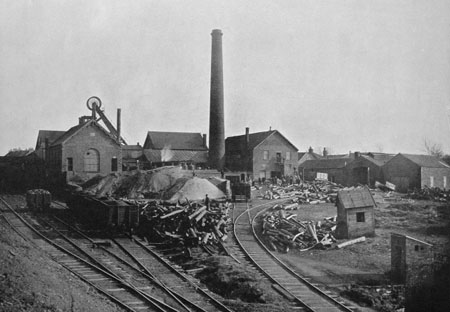
Speedwell Colliery The family’s mining activities were confined to the Bedminster area until the mid-1890s, when they acquired the pits formerly owned by Leonard, Boult and Co Ltd. A new company, Bristol United Collieries Ltd, was formed, although the Bedminster Coal Company continued to exist. (List of Mines in the United Kingdom of Great Britain and Ireland and the Isle of Man (1898: HMSO: London), pp. 284 & 285)
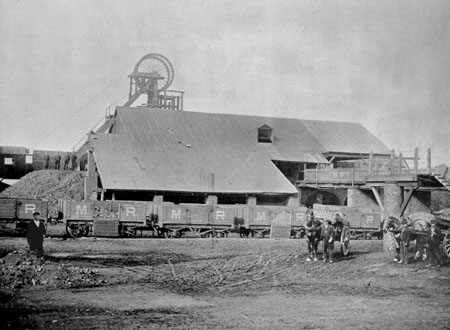
Deep Pit Colliery in the 1890s On 24 May 1900 Handel Cossham’s collieries were auctioned, the main lot consisting of Speedwell, Deep Pit, Parkfield and South Pit, together with the mineral rights to 2,420 acres .[Bristol Record Office: 9492/49, prospectus for the sale of Kingswood and Parkfield collieries, 1900] The properties were sold for £61,000 to Cuthbert R Morris, an auctioneer and estate agent from North Curry, presumably acting as agent for the Bennetts whose new company, Bedminster, Easton, Kingswood and Parkfield Collieries Ltd is recorded as the owner in the List of Mines for 1900.(Western Daily Press, 25 May 1900, p. 5; List of Mines in the United Kingdom of Great Britain and Ireland and the Isle of Man (1901: HMSO: London), pp. 302-304 & 315)
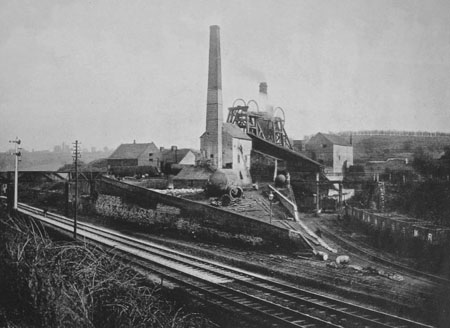
Parkfield Colliery The scale of the business declined rapidly over the next few years, Dean Lane being abandoned in 1906 and Easton in 1911. (Catalogue of Plans of Abandoned Mines. Gloucestershire (nd: HMSO: London), p. 3; Catalogue of Plans of Abandoned Mines. Somerset (nd: HMSO: London), p. 9) By 1914 Bedminster, Easton, Kingswood and Parkfield Collieries Ltd was in receivership and the remaining collieries were then bought by the most important of these “professional coalowners,” the Beauchamp family, who will be dealt with in more detail in the following chapter.(Coal Industry Commission. Volume II. Reports and Minutes of Evidence on the Second Stage of the Inquiry, Cmd 360 (1919: HMSO: London), p. 896) 7.3: Former Mining Engineers and Colliery Managers 7.3.1: Handel Cossham The outstanding example of this category is Handel Cossham who was born at Thornbury in 1824, the son of a carpenter. His first involvement with the coal industry came in 1845, when he commenced work as a clerk at Yate colliery. In 1848 he married Elizabeth Wethered of Little Marlow and soon afterwards went into business in partnership with her father, William, and brothers Joseph, Henry and Edwin. (Joseph Stratford (1890: William Lewis & Son: Bath) Handel Cossham, MP: Brief Outlines of a Full Life, p. 70) According to his notebook, Cossham seems to have begun work at what was later to become Parkfield colliery in April 1851. Initially he was producing coal at Cook’s Pit and Shortwood, whilst sinking another pit. The notebook lists eleven pits in the area, but it is unclear which, if any, of these were incorporated into Parkfield; Hunt’s list for 1854 includes Parkfield plus one of the other eleven, Brandy Bottom, (although that was then worked by Jefferis, Walters and Co), whilst omitting Cook’s Pit and Shortwood altogether.(Bristol Record Office, 9492/16a, Handel Cossham’s notebook, 1851-1853; Robert Hunt (1855: Longman, Brown, Green, and Longmans: London) Mineral Statistics of the United Kingdom of Great Britain and Ireland for 1853 and 1854, pp. 120-121) Initially Cossham worked Parkfield in partnership with the Wethereds
and J P Bendall, and the notebook gives some details of the extent of
the various partners’ stakes In 1863 the partnership acquired Speedwell and Deep Pit at St George, this part of the business initially being run by Cossham and Wethered Ltd, and from 1867 by the Kingswood Coal and Iron Ltd. (John Cornwell (1983: D Brown and Sons: Cowbridge), Collieries of Kingswood and South Gloucestershire, p. 60; Robert Hunt (1866: Longmans, Green, Reader, & Dyer: London) Mineral Statistics of the United Kingdom of Great Britain and Ireland, for the Year 1865, p. 291; Robert Hunt (1872: Longmans, Green, & Co: London) Mineral Statistics of the United Kingdom of Great Britain and Ireland, for the Year 1870, p. 202) In 1878 or 1879 Kingswood and Parkfield Colliery Company Limited was formed to acquire the Wethereds’ interest, the business subsequently passing into the control of Cossham and Charles S Wills (a member of the tobacco family and the brother of Edward Payson Wills who was chairman of the Bristol Colliery Company Ltd, owners of Malago Vale colliery). (Joseph Stratford (1890: William Lewis & Son: Bath) Handel Cossham, MP: Brief Outlines of a Full Life, p. 60; Roger Till (no publication details given) Wills of Bristol Ltd; Reports to the Right Honourable the Secretary of State for the Home Department on an Explosion which Occurred at the Malago Vale Colliery, Bristol, on the 31st August 1891, C 6571 (1892: HMSO: London), p. 12) Cossham managed to combine his business activities with a career in politics. A Liberal, he was a member of Bristol City Council from 1864 to 1870, and then of Bath City Council, where he was mayor in 1882-3 and 1884-5. Finally he was served as MP for Bristol East from 1885 until his death in 1890.(Spencer Jordan, Keith Ramsey & Matthew Woollard (1997: University of the West of England: Bristol) Abstract of Bristol Historical Statistics Part 3: Political Representation and Bristol’s Elections 1700-1997, pp. 145 & 201; Bristol Times & Mirror, 26 April 1890, p. 10) Cossham’s estate was valued at £59,127. He left his property to his wife for her lifetime, after which, since they had no children, it was to be sold and the proceeds used to build a hospital “in or near Kingswood Hill,” and thus, as described above, the collieries passed into the hands of the Bennett family.(The Times, 11 July 1890. p. 9; Western Daily Press, 11 July 1890, p. 8) 7.3.2: Egbert Spear Another entrepreneur from a similar background, although somewhat less successful than Cossham, was Egbert Spear, grandson of the manager of Writhlington colliery. Born in 1860, his career seems to have begun as a salesman for the Malago colliery in 1880 and by 1886 he was commercial manager at the Earl of Warwick’s collieries at Clutton. (Bristol in 1898-99: Contemporary Biographies, Volume 2 (1899: Brighton: W T Pike & Co), p. 308) By 1903 he was a director of Dunkerton Collieries Ltd and by 1909 a director of Mells Collieries Ltd, whilst Pensford and Bromley Collieries Ltd and Newbury Collieries Ltd later became part of the same group. (C G Down & A J Warrington (nd: David & Charles: Newton Abbot) The History of the Somerset Coalfield, pp. 120 & 229-230; Bristol University Library, Somerset Miners’ Association papers, DM443, company notepaper used for letter dated 9 March 1921) The collieries did not prosper, however, Dunkerton being closed in 1925 , Newbury in 1927, and Mells Collieries Ltd going into receivership in 1930, leaving Spear’s coal interests confined to his directorship of Pensford and Bromley Collieries (1921) Ltd. (C G Down & A J Warrington (nd: David & Charles: Newton Abbot) The History of the Somerset Coalfield, pp. 124-125, 231 & 236) Little is known of Spear himself, but it seems likely that, like Handel Cossham, he provided the mining expertise, whilst his co-directors provided the finance necessary for the development of the business. It appears, however, that their management skills left something to be desired; Dunkerton, in particular, had the reputation of being a dangerous pit, where working conditions where regarded as less important than output, with the result that there were frequent injuries. (C G Down & A J Warrington (nd: David & Charles: Newton Abbot) The History of the Somerset Coalfield, pp. 120-121; Fred Flower (1990: Millstream Books: Bath) Somerset Coalmining Life, p. 83) 7.4: Local Capitalists Bulley has identified this class of owner in Somerset as early as 1685, when two glaziers, Roger and Josias Cofton held shares in a pit at Chelworth. Throughout the eighteenth and early nineteenth centuries, investors in Somerset collieries included bakers, carpenters, apothecaries, brewers and clergymen, although Bulley points out that during that period it was possible to buy a share in such an enterprise for a relatively small amount. (John A Bulley (1953) ““To Mendip for Coal” - A Study of the Somerset Coalfield before 1830, Part 2: Masters and Men,” Proceedings of the Somersetshire Archæological & Natural History Society, XCVIII, pp. 17-54, 19) 7.4.1: The Wethered Family The Wethered family invested in the industry on a much larger scale, and, although the original source of their capital is unknown, it is possible that, in view of their origins at Little Marlow in Buckinghamshire, they were members of the brewing family. The most prominent member of the family was Joseph Wethered, who has been categorised by Harvey and Press as one of an ambitious group of Bristol capitalists “united in their desire to increase their wealth and power,” who were among the associates of George White. (Charles Harvey & Jon Press (1989: The Historical Association: Bristol) Sir George White of Bristol, 1854-1916, p. 3) Wethered’s business interests outside his partnership with Cossham included a zinc smelting plant in Bristol (although this was last listed by Hunt in 1875), the Bristol Tramways Company and directorships of the Bristol and North Somerset Railway and the Netham Alkali Works.(Robert Hunt (1876: Longmans, Green, & Co: London) Mineral Statistics of the United Kingdom of Great Britain and Northern Ireland, for the Year 1875, p. 281; Charles Harvey & Jon Press (1989: The Historical Association: Bristol) Sir George White of Bristol, 1854-1916, p. 9; Charles Harvey & Jon Press (1988) “Industrial Change and the Economic Life of Bristol since 1800,” in Harvey & Press (1988) pp. 1-32, 25; Charles Harvey & Jon Press (1988) “ Sir George White and the Urban Transport Revolution in Bristol, 1875-1916,” in Harvey & Press (1988) pp. 137-163, 139) He was also a director, and from about 1885 chairman, of the Great Western Colliery Company; the company owned collieries in South Wales and Wethered’s directorship is the only evidence found of the involvement of a local coal owner in another district. (Thomas Skinner (nd: Cassell & Co: London) The Stock Exchange Year-Book for 1885, p. 359) 7.5: Owners Primarily Concerned with other Industries 7.5.1: The Ashton Vale Iron Company In Bristol, the foremost example of this category was the Ashton Vale Iron Company Ltd, which was incorporated in 1864 as the successor to a series of partnerships which included Baynton, Knight and Co, Knight, Abbots and Co and Edwin Knight and Co. (The Stock Exchange Official Intelligence for 1925 (nd: Spottiswoode, Ballantyne Co: London) p. 1361; Robert Hunt (1855: Longman, Brown, Green, and Longmans: London) Mineral Statistics of the United Kingdom of Great Britain and Ireland for 1853 and 1854, p. 120; Philip Riden & John G Owen (1995: Merton Priory Press: Cardiff) British Blast Furnace Statistics 1790-1980, p. 35) In addition to its iron works, the company also owned Ashton Vale and South Liberty collieries and iron mines at Ashton Vale and Ashton Hill. (Robert Hunt, Mineral Statistics of the United Kingdom of Great Britain and Ireland, passim; List of Mines, passim) From 1885 Riden and Owen list the owners of the Ashton Vale ironworks as the Ashton Furnace Co, although it is not known whether this represents a change of ownership or merely of trading name. The works appear to have been in decline, however, and are last listed in 1893. (Philip Riden & John G Owen (1995: Merton Priory Press: Cardiff) British Blast Furnace Statistics 1790-1980, p. 35) The Ashton Vale Iron Company was still listed as the owner of the collieries, but Ashton Vale colliery, too was nearing the end of its life and had closed by 1907. South Liberty survived until 1925, after which the company’s only remaining business was its brick and tile works which survived until the 1960s.(Year 1907. List of Mines in the United Kingdom of Great Britain and Ireland and the Isle of Man. (1908: HMSO: London), p. 420; Mines: Year 1925 List of Mines in Great Britain and the Isle of Man (1926: HMSO: London) p. 315; The Stock Exchange Official Year-Book 1938 (nd: Thomas Skinner & Co: London) p. 872) The directors of the company seem to have been particularly active in local politics: between 1868 and 1904, Henry Napier Abbot, William Wilberforce Jose and William Henry Miles all served as Conservative members of the City Council, indeed, at any time between those two dates one of them was always in office. (Spencer Jordan, Keith Ramsey & Matthew Woollard (1997: University of the West of England: Bristol) Abstract of Bristol Historical Statistics Part 3: Political Representation and Bristol’s Elections 1700-1997, pp. 8, 9, 47, 48, 57 & 58) Furthermore, it is possible that the company’s influence was even greater, since various other councillors shared the names of other directors, but cannot be definitely identified.(Stock Exchange Year Book, passim; Spencer Jordan, Keith Ramsey & Matthew Woollard (1997: University of the West of England: Bristol) Abstract of Bristol Historical Statistics Part 3: Political Representation and Bristol’s Elections 1700-1997, passim) 7.5.2: The Westbury Iron Company The coal and iron industries were also linked in the Radstock area. As mentioned above, George Greenwell, manager of the Waldegrave collieries at Radstock, was also responsible for the discovery of iron ore at Westbury in Wiltshire and became a director of the Westbury Iron Company Ltd which itself owned the Moorewood, Newbury and Mackintosh collieries in the Nettlebridge Valley. (Robert Hunt, (1876: Longmans, Green, & Co: London) Mineral Statistics of the United Kingdom of Great Britain and Northern Ireland, for the Year 1875, p. 256) Greenwell’s discovery was made in 1855, and the Westbury works was set up in 1857. It was somewhat larger than the Ashton Vale works, possessing four blast furnaces compared to the latter’s two; in addition the Westbury Iron Company owned another works with two furnaces at Seend for a time during the 1860s. The company owned the Westbury works until 1901 and was then briefly succeeded by the Westbury Iron, Mining and Smelting Company, after which it passed into the hands of the New Westbury Iron Company Ltd which owned it until it was dismantled in 1939. (George Clementson Greenwell (1899: The Quarry Publishing Co: London) The Autobiography of George Clementson Greenwell, pp. 138-139; Philip Riden & John G Owen (1995: Merton Priory Press: Cardiff) British Blast Furnace Statistics 1790-1980, pp. 35-36) With a coalfield nearby, it was natural that the company should consider mining coal for itself, and thus it had acquired its first colliery, Newbury by the early 1860s, this being followed by the sinking of Mackintosh in 1867 and Moorewood in about 1869/70. This phase of the company’s activities was relatively short-lived, since Moorewood had to be closed down due to flooding in 1873, whilst Newbury and Mackintosh had been sold to a quarrying company, John Wainwright & Co Ltd, by 1900. (George Clementson Greenwell (1899: The Quarry Publishing Co: London) The Autobiography of George Clementson Greenwell, p. 161; C G Down & A J Warrington (nd: David & Charles: Newton Abbot) The History of the Somerset Coalfield, pp. 233-234 & 248; Kelly’s Directory of the County of Somerset 1906 (nd: Kelly’s Directories Ltd: London) p. 39) The other industry mentioned by Mitchell in connection with this category is the manufacture of bricks and firebricks. The pits operated by local brick-making firms such as the Bristol Fire Clay Company Ltd and the Yate Brick Company were extremely small, all the records examined showing that none employed more than ten men. In addition, the pits all produced clay as well as coal (the Bristol Fire Clay Co’s pit at Trooper’s Hill produced only clay), so it is a debatable point whether the bricks or the coal were the primary products of these businesses. (Year 1907. List of Mines in the United Kingdom of Great Britain and Ireland and the Isle of Man. (1908: HMSO: London), pp. 405 & 409)
7.6: Joint Stock Companies The only known public limited companies operating in the area were Writhlington Collieries Company Ltd, Pensford and Bromley Collieries (1921) Ltd, New Mells Colliery Company Ltd, the Ashton Vale Iron Company Ltd and Somerset Collieries Ltd. However, only the latter two were listed in any of the editions of The Stock Exchange Year Book which it was possible to consult whilst carrying out the research for this essay. Despite this, some details of these companies have been found in the papers of the Somerset Miners’ Association relating to wages ascertainments.
The only company to have attracted investment from outside the area on any great scale was New Mells Colliery Company Ltd, NEXT
|